
BPJS Kesehatan is the largest payer for most hospitals in Indonesia, yet ironically, it is also the slowest source of cash. When manual verification is conducted under severe time pressure, documentation errors become inevitable. This case study explores how implementing artificial intelligence (AI) embedded directly into medical workflows can transform a dragged out claim cycle into an optimal and smooth cash flow.
At a Glance: Key Challenges and Solutions
Key Challenge: Piles of pending claims caused by slow manual verification processes, triggering weeks of lost time in the operational cycle.
Focus Areas: Addressing medical documentation failures such as incomplete medical resumes, mismatched diagnosis codes, and missing supporting documents.
Solution: Implementation of an AI Pre-Submission Gate to review 100% of claim bundles before they are submitted to BPJS.
The Financial Problem: Pending Claims Are Interest-Free Loans
For hospital management, every pending or rejected BPJS claim is essentially an interest-free loan that the hospital never agreed to extend. When multiplied by thousands of delayed claims, this pending pile turns into a permanent financial burden that restricts company liquidity.
In reality, rejections are rarely caused by medical treatment errors. The vast majority of rejections are purely documentation failures that are caught far too late in the submission cycle.
Breaking the Manual Verification Doom Loop
Historically, hospitals have relied on casemix teams to perform quality control the only way they can, by checking claims manually, one by one. Under strict deadline pressure and with tired eyes, the team can only catch a fraction of the errors.
This triggers an exhausting, weeks long cycle. It starts from claim submission, waiting weeks for a BPJS response, receiving a pending status, hunting for missing data, correcting INA CBG codes, and finally resubmitting the claim.
Sprout’s Approach: The AI Pre-Submission Gate
Sprout injects purpose-built document intelligence designed specifically for medical workflows. This system connects directly to the hospital information system (HIS/EMR), reading the actual files rather than merely checking off lists.
Through this pre-submission gate, Sprout reviews every claim bundle exactly how your best casemix verifier would, with the key difference being that the system checks 100% of the files before they ever leave the hospital building. Sprout utilizes three layers of automated diagnostic scanning:
1. Completeness
The system automatically verifies the presence of medical resumes, supporting examination results, and required signatures.
2. Consistency
The system aligns the primary diagnosis with the procedures performed, the length of hospital stay, and the dispensed medications.
3. Grouping Validation
The system ensures that the entered INA CBG code is neither undercoded nor vulnerable to disputes.
Through a live data dashboard, every flag and override is logged. Actionable findings that previously took weeks to receive from BPJS can now be identified and resolved by the internal team in minutes, while the patient episode is still fresh.
Tangible Results: Accelerating Cash and Lifting Claim Value
Using a Forward Deployed Engineering model, the Sprout team is embedded directly inside the hospital's casemix operations until the performance numbers actually move. Disciplined checking does not just speed up payments, it ensures the hospital does not leave money on the table.
Key Performance Indicators | Business Impact for Hospitals |
Claim Cycle Time | Successfully pulled 2 weeks from the submission cycle. |
Optimal Claim Value | Achieved a 15% higher claim value through disciplined, EMR supported validation. |
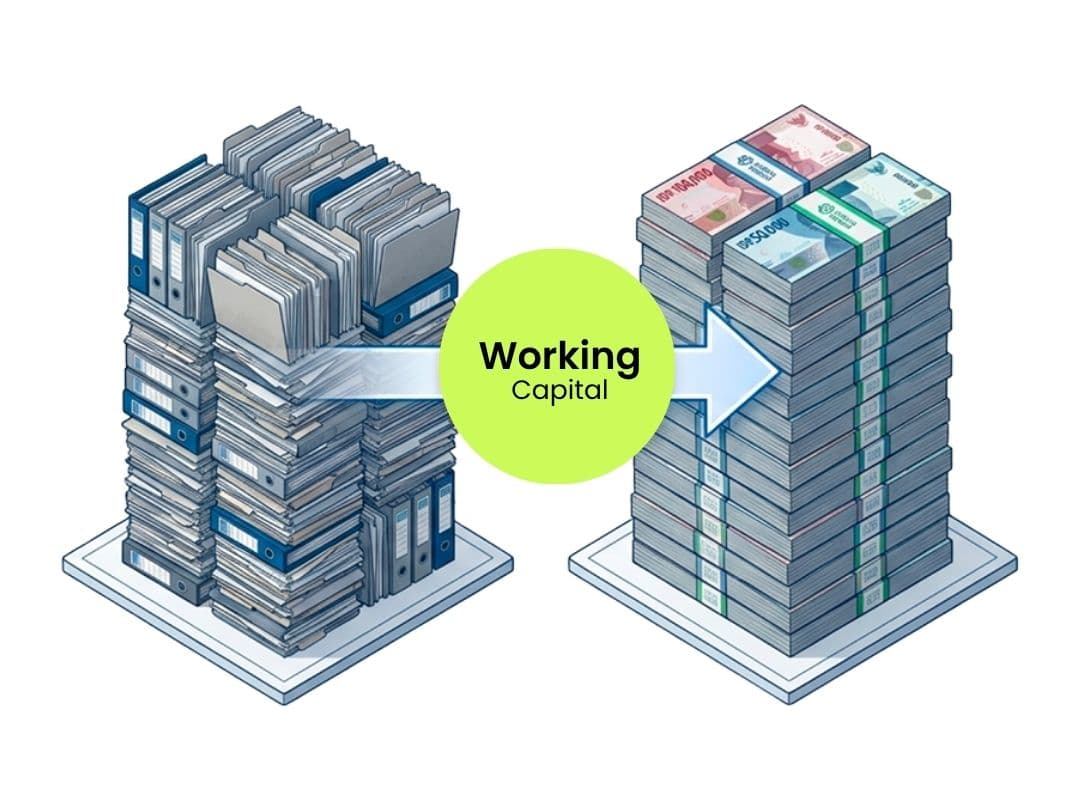
Working Capital Freed | Successfully freed Rp 5 Billion in working capital (based on a Rp 10 Billion/month BPJS volume). |
Do not let documentation errors drain your medical team's energy and restrict your hospital's cash flow.
Stop BPJS claim rejections and accelerate your hospital's cash flow. Contact Sprout Now!