
The landscape of enterprise technology across Southeast Asia is undergoing a massive and fundamental transformation. For years, the traditional approach to building software for businesses followed a very predictable and highly flawed corporate path. Executives would sit in air conditioned boardrooms in the capital city, look at abstract market data, and attempt to design applications for people they had never actually met. They would build software based on assumptions rather than reality. This top down approach is exactly why so many expensive digital platforms fail completely when they are finally introduced to the actual operators on the ground. When you are building technology for traditional logistics companies, regional agricultural cooperatives, or mid level manufacturing plants, boardroom theories are completely useless.
To create software that actually survives and thrives in the real world, you have to fundamentally change where and how the innovation happens. You have to move the product design process out of the corporate office and directly into the hands of the people who actually write the code and understand the daily chaos of the market. The most powerful and profitable technology products currently being deployed across the region are not born from endless executive meetings. They are forged in the high pressure, deeply collaborative environments of competitive engineering. By turning real world business problems into intense technical tournaments, we can strip away the corporate assumptions and force engineers to build solutions that actually work. This is the new blueprint for creating highly specific, deeply valuable technology for the traditional economy.
The Core Challenge of Vertical AI Emerging Markets
To understand why competitive engineering is so vital, we first must define the unique challenges of building software in this specific region. The technological ecosystem here is heavily dominated by millions of micro, small, and medium enterprises. These conventional operators are the undeniable driving force of the national GDP, yet their daily operational workflows are incredibly complex and largely informal. A local garment factory or an industrial material distributor does not operate like a highly structured Silicon Valley tech company. Their daily data is often chaotic, their communication happens almost entirely over consumer chat applications, and their profit margins are too tight to risk on experimental software.
When software developers try to introduce general artificial intelligence to these businesses, the failure is immediate and spectacular. General artificial intelligence is trained on broad internet data, meaning it completely lacks the deep, specialized context required to solve a highly specific industrial problem. A smart chatbot cannot calculate the exact curing time for an industrial floor coating, nor can it optimize a delivery route based on the unspoken habits of local truck drivers. The market desperately requires highly specialized intelligence that intimately understands one specific industry perfectly. Building this specialized intelligence is incredibly difficult because it requires combining hard technical coding skills with deep, raw knowledge from the factory floor. Finding the intersection between these two completely different worlds is the greatest challenge in modern software development.
Rethinking Innovation Through Competitive Engineering
If traditional corporate planning cannot successfully bridge the gap between advanced software engineering and raw industrial knowledge, how do we actually build these specialized platforms? The answer lies in fundamentally restructuring the innovation process. Instead of writing long, theoretical business requirement documents, we must create environments where domain experts and software engineers are forced to collaborate rapidly to solve a singular, highly specific problem. This is where the concept of competitive engineering becomes the ultimate catalyst for market innovation.
By hosting intense, time constrained engineering tournaments, you create a perfect pressure cooker for technological breakthroughs. In these environments, there is absolutely no time for useless features, bloated user interfaces, or abstract corporate jargon. Engineers are presented with a real, painful problem currently faced by a mid level UMKM operator, and they are challenged to write working code to solve it within a matter of hours or days. This intense focus strips away everything that is unnecessary. The developers cannot hide behind fancy presentation slides; they have to present a working prototype that actually processes data accurately. This raw, results driven environment consistently produces the most creative, operator respectful, and highly functional software architectures we have ever seen in the industry.
The Mechanics of the Open Tournament Format
To ensure that these engineering competitions actually produce valuable business tools, they must be structured very carefully. You cannot simply put fifty programmers in a room and tell them to build something random. The innovation must be heavily guided by real market needs. This is precisely why a multi tiered competition structure is so highly effective. The first crucial layer of this structure is the Open Tournament format.
In an Open Tournament, the focus is entirely on the business logic and the creative approach to the problem, rather than just the final code. This format actively invites domain experts, business developers, and industry operators to participate alongside the technical teams. A warehouse manager who has spent ten years dealing with broken supply chains can partner with a young data scientist to pitch a new way of tracking inventory. They do not need to build the entire enterprise software over the weekend; they simply need to prove that their specific logical approach solves the pain point better than the current manual process. The Open Tournament acts as a massive net, catching brilliant, unorthodox ideas directly from the people who experience the industrial pain every single day.
Driving Solutions in Vertical AI Emerging Markets
While the Open Tournament provides the crucial business logic, the ideas must eventually be transformed into hardcore, enterprise grade technology. Recently, the Sprout office hosted Hackathon 4.6, a massive internal event perfectly designed to showcase this exact philosophy. This competition was strictly divided into two distinct categories to maximize the output. Alongside the open format, the event featured a highly rigorous Engineer Tournament.
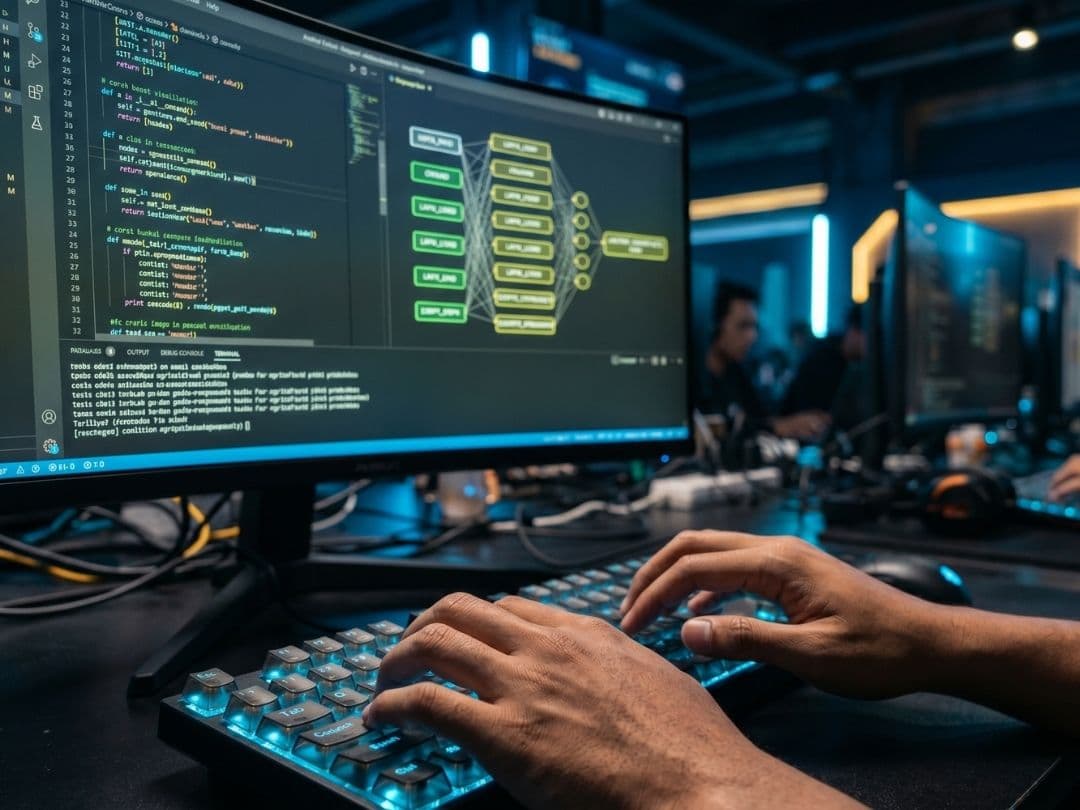
In the Engineer Tournament, the technical constraints are absolute and the standards are incredibly high. This is where elite programmers take the validated business problems and attempt to build the actual specialized intelligence engines. They are not building basic websites; they are writing complex algorithms capable of reading unstructured text messages, predicting localized logistics failures, and automating zero commission financial transactions. During Hackathon 4.6, we witnessed firsthand how raw engineering talent, when pointed directly at a specific UMKM problem, can rapidly construct the foundational architecture for powerful, specialized software. These engineers are not guessing what the market needs. They are looking at the exact data from conventional businesses and writing the precise code required to automate those specific operational headaches.
The Role of Studio AI and Product Engineering
A successful hackathon or engineering tournament generates incredible momentum, but a weekend prototype is still miles away from a production ready software platform. An algorithm that works perfectly on an engineer's laptop will immediately crash when it is exposed to the chaotic, unpredictable data of a thousand busy factory workers. To turn a brilliant tournament prototype into a reliable market solution, you need a dedicated, highly disciplined transition mechanism.
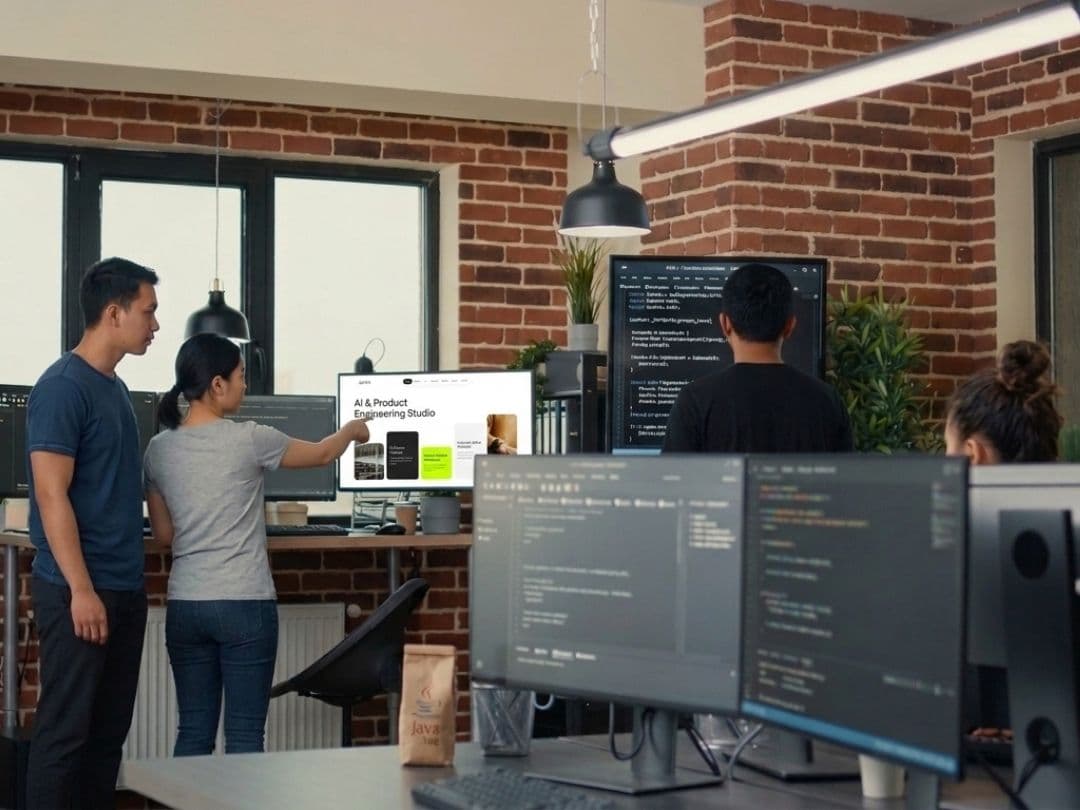
The hero section of this entire operation is the Studio AI & Rekayasa Produk. This specific AI Studio and Product Engineering division is the absolute core engine of the venture building process. When the Engineer Tournament concludes and the winning prototypes are selected, this specialized team takes over the project. Their job is not to invent the idea, but to make the idea indestructible. They take the raw, brilliant code generated during the competition and systematically strip away any vulnerabilities. They ensure the database architecture can handle massive scale, they enforce strict security protocols required by national regulators, and most importantly, they refine the user experience so that the final software is completely invisible and effortless for the end user. The Studio AI & Rekayasa Produk transforms a fragile technical experiment into a heavy duty, operator respectful infrastructure capable of running an entire supply chain.
Deploying Code for Monday Morning Realities
The ultimate validation of this entire process, from the initial Open Tournament pitch to the final polish in the product engineering studio, only happens when the software meets the real market. We refer to this critical moment as the Monday morning reality. It does not matter how many awards the code won during the hackathon. The only thing that truly matters is what happens when a local distributor opens their warehouse doors at seven in the morning to start their work week.
Because the software was born from a real problem, engineered under immense competitive pressure, and refined by an elite product studio, the results on Monday morning are entirely different from traditional corporate software. The technology actually works. The mid level UMKM operators do not have to change their daily habits because the intelligence is wired seamlessly into their existing chat applications. The factory managers finally have accurate predictions regarding their raw material stock, and the business owners can process zero commission payments instantly. By fundamentally rejecting the corporate boardroom and embracing the raw, competitive energy of engineer tournaments, we are not just building better applications. We are actively constructing the highly specialized, incredibly robust digital infrastructure that the Southeast Asian economy desperately needs to dominate the next decade of growth.