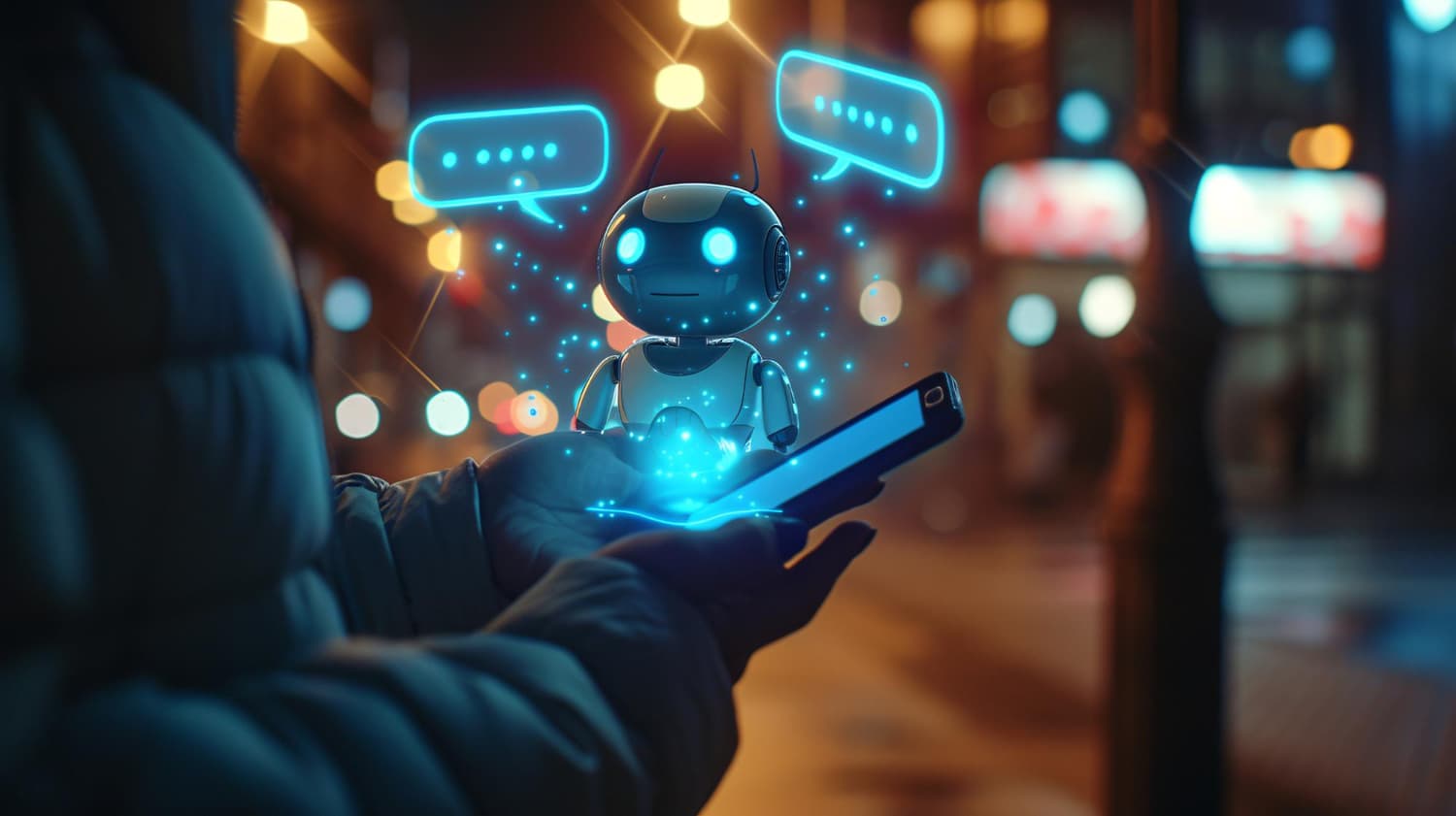

Hey there! Ever found yourself wondering if you're talking to a real person or a computer when getting help online? Welcome to the world of chatbots! These digital assistants are revolutionizing how businesses interact with customers, and they're here to stay. But what exactly are chatbots, and why should you care? Let's dive in and explore this fascinating technology.
Key Takeaways:
Chatbots are AI-powered programs that simulate human conversation
They're transforming customer service, marketing, and sales across industries
Chatbots offer 24/7 availability, cost savings, and improved customer experiences
Implementing chatbots requires careful planning and ongoing optimization
The future of chatbots includes more advanced AI and integration with other technologies
What Are Chatbots, Anyway?
So, what's all the fuss about? Chatbots are computer programs designed to simulate human conversation through text or voice interactions. They use artificial intelligence (AI) and natural language processing (NLP) to understand user queries and provide relevant responses. Think of them as digital assistants that can handle a wide range of tasks, from answering frequently asked questions to processing orders and providing personalized recommendations.
But aren't chatbots just those annoying pop-ups on websites? Not anymore! Modern chatbots have come a long way from their simple rule-based ancestors. Today's AI-powered chatbots can understand context, learn from interactions, and even detect emotions in some cases. Pretty cool, right?
Why Businesses Are Falling in Love with Chatbots
Now, you might be wondering why businesses are so excited about chatbots. Well, there are quite a few reasons:
24/7 Availability: Chatbots don't need sleep or coffee breaks. They're always on, ready to assist customers at any time of day or night.
Cost Savings: By handling routine inquiries, chatbots can significantly reduce the workload on human customer service representatives.
Improved Customer Experience: Quick responses and instant support lead to happier customers. Who doesn't love getting their questions answered right away?
Scalability: Chatbots can handle multiple conversations simultaneously, making it easy for businesses to scale their customer support.
Data Collection: Through interactions, chatbots gather valuable insights about customer preferences and behavior.
Did you know that according to a study by Juniper Research, chatbots are expected to save businesses $8 billion annually by 2022? That's a lot of zeros!
Types of Chatbots: From Simple to Sophisticated
Not all chatbots are created equal. Let's break down the main types you'll encounter:
Rule-Based Chatbots
• Follow predefined rules and decision trees
• Best for simple, straightforward tasks
• Limited in their ability to understand complex queriesAI-Powered Chatbots
• Use machine learning and natural language processing
• Can understand context and learn from interactions
• Handle more complex conversations and tasksHybrid Chatbots
• Combine rule-based and AI approaches
• Offer the best of both worlds: reliability and flexibility
Which type is right for your business? It depends on your specific needs and goals. But remember, even the most advanced chatbot might need a human touch sometimes!
Chatbots in Action: Real-World Applications
Chatbots aren't just theoretical – they're making waves across various industries. Let's look at some practical applications:
Customer Service: Handling inquiries, troubleshooting issues, and providing product information.
E-commerce: Assisting with product selection, processing orders, and tracking shipments.
Healthcare: Scheduling appointments, providing basic medical information, and medication reminders.
Banking: Checking account balances, transferring funds, and reporting lost cards.
Travel: Booking flights and hotels, providing travel information, and handling itinerary changes.
For example, the cosmetics brand Sephora uses a chatbot on Facebook Messenger to help customers find the perfect makeup products. The bot asks questions about skin type and color preferences, then recommends suitable products. Talk about personalized service!
Building a Successful Chatbot: Tips and Strategies
Ready to jump on the chatbot bandwagon? Here are some practical tips to get you started:
Define Clear Goals
• What do you want your chatbot to achieve?
• How will you measure its success?Know Your Audience
• Understand your customers' needs and preferences
• Tailor your chatbot's personality and language accordinglyPlan the Conversation Flow
• Map out potential user scenarios and responses
• Ensure smooth transitions between topicsUse Natural Language
• Make interactions feel human-like and conversational
• Avoid robotic or overly formal languageProvide Clear Options
• Guide users with suggested responses or menu options
• Make it easy for users to navigate the conversationInclude a Human Handoff Option
• Allow users to connect with a human agent when needed
• Ensure a smooth transition from bot to humanContinuously Improve
• Analyze chatbot performance and user feedback
• Regularly update and refine your chatbot's responses
Remember, Rome wasn't built in a day, and neither is a perfect chatbot. It's an iterative process that requires patience and ongoing optimization.
The Future of Chatbots: What's on the Horizon?
As AI technology continues to advance, what can we expect from chatbots in the future? Here are some exciting possibilities:
More Advanced AI: Chatbots will become even better at understanding context, emotions, and complex queries.
Voice-Enabled Chatbots: Integration with voice assistants like Siri or Alexa for more natural interactions.
Augmented Reality (AR) Integration: Imagine a chatbot that can visually guide you through product assembly or troubleshooting.
Emotional Intelligence: Chatbots that can detect and respond to user emotions more effectively.
Personalization at Scale: Hyper-personalized interactions based on user data and preferences.
The possibilities are endless, and it's an exciting time to be in the world of chatbots!
Embracing the Chatbot Revolution
Chatbots are more than just a passing trend – they're reshaping how businesses interact with customers. By providing instant, personalized support at scale, chatbots are improving customer experiences and driving efficiency. As the technology continues to evolve, we can expect even more innovative applications in the future.
Ready to explore how chatbots can benefit your business? Start by identifying areas where automated interactions could improve your customer experience. Remember, the key to success is finding the right balance between automation and human touch.
FAQ
Q: Are chatbots replacing human customer service agents?
A: Not entirely. While chatbots can handle many routine tasks, human agents are still essential for complex issues and situations requiring empathy. Chatbots are best viewed as a complement to human support, not a replacement.
Q: How much does it cost to implement a chatbot?
A: Costs can vary widely depending on the complexity of the chatbot and your specific needs. Simple rule-based chatbots can be relatively inexpensive, while advanced AI-powered solutions may require a more significant investment. Many platforms offer scalable pricing based on features and usage.
Q: How long does it take to develop and implement a chatbot?
A: The timeline can range from a few weeks for a basic chatbot to several months for a more complex, AI-powered solution. Factors like integration requirements, customization needs, and the complexity of your use cases will affect the development time.