
Every single time you turn on the television, open a business magazine, or scroll through your daily social media feeds, someone is talking loudly about how Artificial Intelligence is rapidly changing the entire world. It is incredibly tempting to look at your own conventional business and feel a sudden, overwhelming panic. You might think that you need to buy an expensive, complicated artificial intelligence system right this second so your company does not get completely left behind by the competition. You might imagine that buying a smart software program will act like a magic wand that miraculously fixes your delayed customer invoices, automatically finds your missing warehouse stock, and doubles your monthly sales overnight without any extra effort on your part.
However, for conventional businesses operating in the real world, like those running busy garment factories, managing daily delivery trucks, or supplying raw materials to local restaurants, rushing into advanced technology without doing the proper groundwork is a very expensive and dangerous mistake. If your biggest daily problem is that your sales reports are scattered across unread text messages, crumpled paper receipts, and broken spreadsheet files, absolutely no amount of smart technology can help you. Artificial intelligence is not magic at all; it is simply a machine that learns from the detailed history of your operations. If your history is a complete mess, the machine will fail miserably. Before you spend a single dollar following the latest internet tech trend, you must master the basics of your own business information. Here is the ultimate guide to organizing your foundation.
The Reality of Everyday Operations Without Business Data Preparation
To truly understand why organizing your records is so incredibly important, we have to take an honest, critical look at how businesses actually run in our region. Across Southeast Asia, there are millions of hardworking micro, small, and medium enterprises. In Indonesia alone, these operators contribute to more than half of the entire national economy. These businesses are the true economic engine of the country, but their daily operations on the factory floor or in the regional warehouse are often extremely chaotic and highly informal.
A local material distributor might use one physical notebook to track all incoming supplies from the harbor, a completely different whiteboard in the back office to schedule which truck driver goes to which province, and a separate group chat on their phone just to complain about delayed payments from difficult corporate clients. The operational information is technically there, but it is entirely scattered, fragmented, and disconnected from the rest of the company. When vital information is scattered like this across different people and different notebooks, your business is operating completely in the dark. You are relying on guessing, gut feelings, and basic assumptions rather than hard, undeniable facts.
Why Rushing into Technology Destroys Your Profit Margins
When you try to quickly introduce advanced technology into a severely disorganized business, the software immediately crashes against the harsh reality of your messy daily operations. Imagine buying a specialized, highly expensive routing system to find the absolute fastest delivery paths for your trucks across the city. To work properly, the software needs to know exactly how many trucks you have running that specific day, what exact time they leave the loading dock, and exactly how heavy the cargo loads are down to the last kilogram.
If that critical information is locked safely inside your senior warehouse manager's head, or casually scribbled on a lost piece of paper that accidentally got thrown in the trash bin, the intelligent software becomes completely useless. You simply cannot build a smart, modern business on top of a broken, unstable foundation. Furthermore, many software companies operate on an extractive business model, charging you high monthly maintenance fees or taking a large commission on your sales even when their software is not working properly for your team. Rushing to buy these shiny new tools without preparing your internal house first will only burn through your hard-earned profit margins and leave you more frustrated than before.
The Power of Simple and Familiar Mobile Tools
Instead of forcing complicated, heavy corporate software on your business, the true goal of getting your records in order is to eventually use simple tools that fit naturally into your daily life. The most successful conventional business owners are quickly realizing that they do not need to force their hardworking employees to learn confusing corporate computer portals. Because mobile phone adoption is incredibly high among all workers, the absolute best approach is to use platforms that are wired directly into the chat applications your team already uses every single day to communicate.
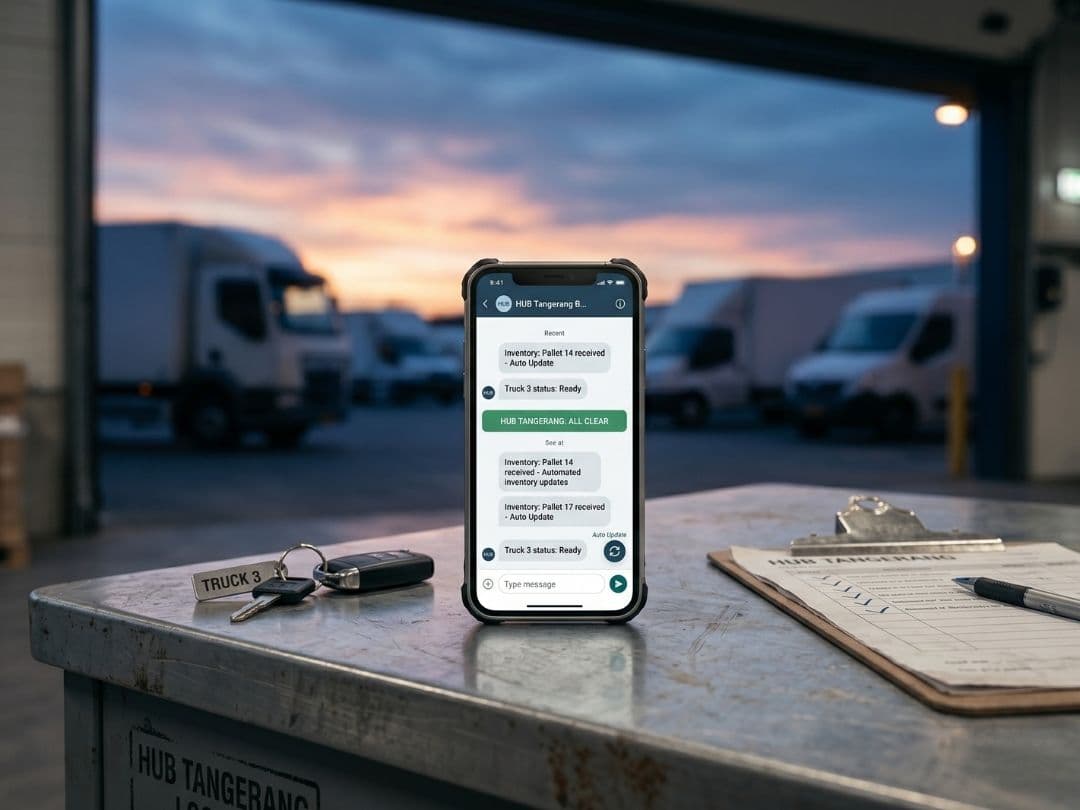
When your foundation is perfectly organized, you can eventually use specialized intelligence that sits quietly and efficiently in the background of your WhatsApp groups. It can automatically read the text messages your suppliers send, organize the daily raw material orders, and seamlessly update your inventory without anyone having to click through ten different confusing computer screens. But to reach that ultimate level of smooth, enterprise-grade intelligence, you absolutely must do the unglamorous, repetitive work of cleaning up your records today.
Step 1: Standardize Names in Your Business Data Preparation Routine
The very first, most critical step to fixing your business records is to make sure everyone in your entire company speaks the exact same language. This sounds incredibly simple, almost too simple to be considered important, but it is actually the number one reason why digital upgrades completely fail in conventional businesses. If your staff cannot agree on the exact name of a product, a computer system will be completely blinded and unable to track anything accurately.
Think about a busy factory that processes and coats industrial materials. If your warehouse team casually calls a specific material "Blue Coating" because that is what the bucket looks like, but your sales team formally writes "Protective Resin Type B" on the official customer invoice, the computer will automatically think these are two completely different, unrelated products. When the computer tries to match the daily sales with the remaining inventory, it will look like you have missing stock and lost money. This creates massive financial discrepancies that take weeks to figure out manually.
Creating a Single Source of Truth for Your Team
To completely solve this naming problem, you must create one definitive master list. You as the business owner must sit down with your managers and decide on the official, final name for every single item you sell, buy, or use in your daily operations.
Once the official master list is formally created, you must completely stop the use of nicknames on the factory floor. You must train your staff, from the senior managers all the way down to the newest warehouse workers, to use the exact same name, every single time. It does not matter if they are writing a quick text message to the boss, filling out a physical delivery slip by hand, or typing up a formal digital receipt for your biggest corporate client. The naming must be perfectly standardized across every single department. When your naming is flawlessly consistent, you instantly stop losing track of your valuable inventory. If you supply raw materials to a busy food factory, you will suddenly know exactly how much raw material left your facility at eight in the morning and exactly how much was officially received by the client an hour later. Standardized naming makes this level of tracking absolutely effortless.
Step 2: Clean Up Your Past Records and Count Your Physical Stock
Advanced technology is designed to act like a brilliant super-assistant that can accurately predict the future based on the deep patterns of your history. For example, specialized supply chain software can analyze your past sales and tell you exactly when you need to order more raw materials from your supplier right before a busy national holiday season, ensuring you never run out of stock when customer demand is at its absolute highest. However, this magical operational prediction only works if your past records are actually accurate.
If your past operational data is filled with careless human errors, completely missed entries, and bad mathematical calculations, the software will confidently give you the wrong advice. You must actively do the hard work of physically auditing your inventory. Do not just sit comfortably in your air-conditioned office and blindly trust what is written on your computer screen or what your manager quickly texted you. You must physically walk into your warehouse, dust off the heavy storage shelves, and manually count the boxes with your own two eyes. If the computer system says you have fifty boxes of supplies, but you only count forty on the shelf, you must investigate to find out exactly where the missing ten boxes went and correct the digital record immediately.
The Rule of Garbage In and Garbage Out
In the professional technology world, there is a very famous and very simple rule: garbage in, garbage out. If you feed a smart, highly expensive computer system with lazy, inaccurate, or deeply incomplete numbers, it will confidently give you terrible, business-destroying advice in return.
If you realize that your team simply forgot to record the sales for three incredibly busy days last month because they were too tired, you must go back, find the physical paper receipts, and carefully fill in those missing blanks. You must entirely remove the garbage from your system. If you do not fix these historical mistakes, the intelligent software will incorrectly think your sales suddenly dropped to zero during those three days, and it will falsely advise you to order far less stock for the next month. By lazily feeding it garbage, you will end up destroying your own profit margins by not having enough products to sell to your loyal, paying customers.
Step 3: Implement Systems That Respect Your Workers on the Ground
The final and arguably most important step in getting your business completely ready for the future is to intelligently set up a system that your ground staff will actually use. Many business owners make the terrible mistake of buying a complicated, highly expensive new software application and abruptly forcing their truck drivers, factory floor workers, or cashiers to use it without ever asking for their input or feedback.
When you forcefully push heavy, confusing software on people who are already working incredibly hard physical jobs, the workers naturally get frustrated. They feel like the technology is trying to replace them, spy on them, or simply make their daily lives significantly harder. Because they are deeply frustrated, they will eventually stop entering the data correctly. They will begin to take shortcuts, skip mandatory input fields, and actively ignore the system protocols. Eventually, your expensive new software system will turn into a massive, useless failure. You must implement technology that fundamentally respects the operator.
The Monday Morning Reality of Proper Business Data Preparation
When you take the necessary time to rigorously clean up your operations, standardize all of your product names, consistently count your physical stock, and choose digital technology that genuinely respects your workers, the positive results are completely undeniable. The most successful conventional businesses in the region are not the ones that simply bought the flashiest software to show off to their industry friends; they are the ones that built the strongest, most disciplined, and most organized data foundations.
We see this exact reality playing out every single Monday morning across the active market. The companies that are actively scaling, growing their net profits, and aggressively dominating their local markets across Southeast Asia are the ones that took the preparation phase incredibly seriously from day one. They did the boring, hard, unglamorous work first. Once your conventional business foundation is entirely clean, perfectly accurate, and recorded consistently by a team that feels respected rather than burdened, you are finally ready to take full advantage of true, specialized artificial intelligence. You will not just be blindly following a temporary internet trend; you will be systematically building a highly efficient, deeply profitable, and completely unstoppable operation that can confidently outpace the competition for many years to come.