
In the corporate technology procurement cycle, cost optimization often drives vendor selection. To win highly competitive enterprise tenders, many traditional software development agencies adopt a variable-cost operational model: they keep their core staff minimal and hire temporary developers, contractors, or freelancers bespoke for each new project. While this approach allows agencies to lower their initial overhead and present highly attractive upfront pricing, it introduces an invisible, catastrophic vulnerability to the enterprise buyer.
Software security is not a static milestone achieved on the day of product delivery. It is a continuous, evolving operational posture. When an enterprise platform is built by a fragmented team assembled solely for the duration of a sprint, the underlying system architecture inherits massive structural risks. Once the contract ends, the temporary team disperses, leaving the enterprise client with a highly complex codebase that no single entity fully understands, owns, or knows how to defend.
To maintain an ironclad security posture and pass rigorous regulatory reviews, corporate technology leaders must move past the limitations of the build-and-abandon vendor model. True long-term structural integrity requires partnering with an engineering organization backed by a permanent, in-house, cross-disciplinary bench.
The Hidden Structural Vulnerabilities of Temporary Project Teams
The Dilution of Architectural Accountability
When software components are developed by temporary contractors, code quality and security documentation are frequently sacrificed in favor of meeting short-term milestone deadlines. Temporary hires lack long-term institutional alignment with the client's business goals. As a result, critical security parameters, such as input validation routines, secure session management, and robust error logging, are often poorly implemented or completely omitted. This lack of continuity leaves behind a fragile digital asset riddled with technical debt, making it highly vulnerable to severe code injections and unauthorized access.
The Day-Two Operational Collapse
The true danger of the bespoke recruitment model manifests on day two, immediately after the application goes live. In high-volume corporate environments, modern security threats emerge constantly, demanding rapid system patches, configuration updates, and immediate infrastructure adjustments.
If a severe data exposure vulnerability is discovered six months after launch, a client relying on a temporary vendor has no dedicated team to call. Attempting to bring in new developers to fix a complex, legacy codebase introduces extreme operational drag: new personnel can take weeks simply to understand the system dependencies, leaving the corporate network exposed during critical threat windows.
The Permanent Seven-Discipline Bench as an Enterprise Shield
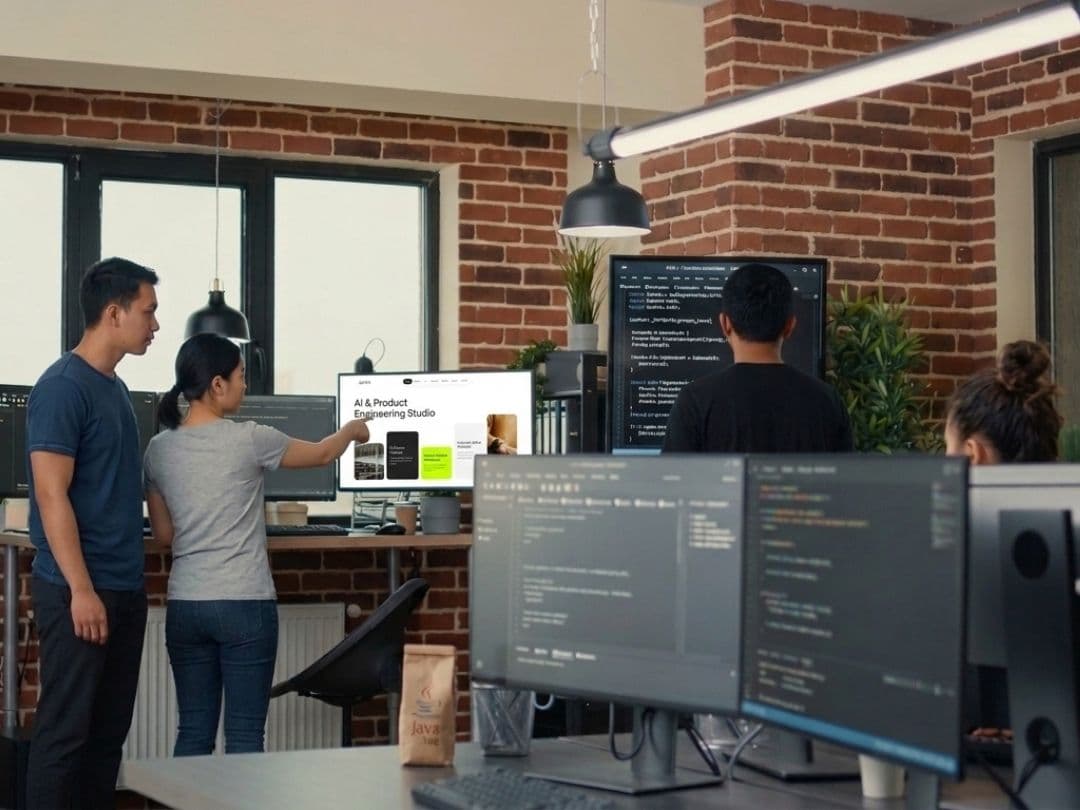
Defending an enterprise application against modern cyber threats requires a deep, cohesive combination of multiple technical specialties. It cannot be sustained by isolated engineers working in silos. True operational safety demands a permanent, in-house organizational bench operating in complete synchronization across seven critical disciplines: product management, design, engineering, quality assurance (QA), DevOps, customer support, and sales.
Having a pre-scoped, stable bench ensures that system safety and regulatory compliance are deeply integrated into the software from the very first line of code:
Product Managers and Designers: Define strict data-handling boundaries and build intuitive interfaces that prevent user manipulation or accidental data exposure.
Engineers and QA Specialists: Collaborate from inception to run continuous security testing, using adversarial red-teaming methods to actively identify and patch memory leaks, weak encryption barriers, and logic flaws before production.
DevOps and Support Teams: Provide continuous, real-time infrastructure monitoring, automating the deployment of critical security patches across cloud nodes while acting as an immediate human-in-the-loop fallback during system anomalies.
Standardizing the Tech Stack for Absolute Compliance
Eliminating Developer Dogma
A permanent engineering bench eliminates another massive risk common to temporary teams: developer dogma. Freelancers often select unverified frameworks or highly eccentric, trendy coding languages that happen to match their personal preferences, leaving the enterprise client with an unmaintainable system architecture.
A disciplined enterprise technology partner relies on a highly governed, curated default set of stable technologies optimized for security, high transaction volumes, and compliance:
The Backend Fabric: Building core processing queues with Go, Python, and Node.js to achieve exceptional performance and predictable memory management.
The Structured Data Core: Storing vital enterprise assets within PostgreSQL and Redis, utilizing event-driven architectures to maintain perfect data synchronization across distributed networks.
The Scalable Frontend: Deploying React, TypeScript, and Next.js to eliminate client-facing code vulnerability risks.
The Native Mobile Perimeter: Utilizing Kotlin, Swift, and Flutter to ensure heavily sandboxed, secure mobile environments.
Surviving the Corporate Procurement Gauntlet
Modern corporate procurement processes act as strict risk-management gates. To pass these vendor-risk reviews, a platform's underlying architecture must align with a dense web of national and international compliance directives.
Standardizing infrastructure across localized AWS and GCP multi-cloud environments allows a permanent DevOps team to construct automated logging systems that record every single server access point in real time. This extreme visibility ensures the system can immediately deliver the immutable data logs, clear Data Processing Agreements (DPAs), and privacy-by-design frameworks required to comfortably clear UU PDP regulations, ISO 27001 certifications, and intensive BSSN or OJK state audits.
Hardcoding Ethical Guardrails in Intelligent Systems
The integration of artificial intelligence into core corporate software has raised the stakes for long-term team continuity. When an enterprise system deploys powerful Python architectures and frontier-model APIs (such as OpenAI and Anthropic) to automate complex decision-making pipelines, the risk of model drift, algorithmic bias, and data leakage rises exponentially.
Managing these intelligent systems safely cannot be accomplished by a temporary vendor who leaves after the initial deployment. It requires a permanent cross-functional team to build and maintain active evaluation harnesses that continuously test the AI's decision-making paths against strict risk boundaries:
OJK April 2025 AI Governance Guidance: Enforcing clear, auditable compliance protocols for automated workflows within regulated financial frameworks.
ISO/IEC 42001: Providing the foundational international management standard to ensure enterprise machine learning remains objective, secure, and fully auditable.
NIST AI RMF and EU AI Act: Integrating global risk mitigation filters to actively prevent algorithmic hallucinations and illegal data ingestion.
By maintaining a stable, unified engineering bench, the software automatically captures and logs its own machine reasoning paths. This process transforms what would normally be an un-auditable "black box" system into a fully transparent, explainable AI platform, allowing corporate legal and technology teams to confidently defend their automated pipelines before state regulators.
Mitigating Risk Through Permanent Engineering Partnerships
Building software capable of weathering severe security threats and strict state audits requires a total rejection of short-term technology shortcuts. True enterprise resilience cannot be achieved through fragmented vendor structures, temporary project-based hiring models, or rigid off-the-shelf software applications that fail to adapt to local market realities. It demands a sophisticated partnership with specialized product engineering experts who possess the operational capacity to manage systems from development through multi-year lifecycles.
The tactical choices your organization implements today regarding its technology vendors will be the primary determinant of your capital efficiency, data security, and long-term compliance standing. By collaborating with a dedicated, permanent multi-disciplinary engineering bench, your enterprise can seamlessly weave a curated tech stack, unified full-time teams, and absolute regulatory defense into a single, cohesive engine of exponential growth. Protect your corporate assets, de-risk your software pipelines, and establish an unassailable, market-dominant technology infrastructure today.