

Rapid technological advancement requires modern enterprises to continuously adapt. In today's fast-moving markets, traditional business models relying on manual workflows and paper documentation face diminishing operational efficiency. Organizations that hesitate to modernize risk losing their market leadership to more agile competitors.
Consequently, implementing company digitization has become a top priority for corporate boards and technology leaders. This move is not merely about following industry trends, but a fundamental requirement to ensure long-term efficiency, resilience, and business growth.
What Is Company Digitization?
Company digitization is the integration of digital technologies and software systems into core operational processes. This transformation replaces manual, analog procedures with data-driven workflows and automation, enhancing operational efficiency and customer value.
Many executives view digitization as simply scanning physical paper documents into digital formats such as PDF or Excel. However, true digitization has a broader scope. It encompasses modernizing tech infrastructure, integrating cross-departmental software, and leveraging artificial intelligence for precise business decision-making.
Company digitization is the deployment of digital technology and automated systems to modernize operational workflows, improve business efficiency, and enhance overall customer experiences.
Digitization vs Digitalization vs Digital Transformation: What Is the Difference?
In strategic discussions, these terms are often conflated. Understanding the distinctions helps leadership set clear, realistic objectives.
Here is a side-by-side comparison:
Term | Primary Focus | Practical Example |
Digitization | Converting analog or physical data into digital formats | Scanning paper forms into PDF files or entering physical sales ledgers into spreadsheets |
Digitalization | Using technology to optimize and automate existing business processes | Automating invoice approval workflows using custom software and artificial intelligence |
Digital Transformation | Overhauling corporate culture, strategy, and business models using tech | Transitioning from traditional brick-and-mortar retail to an AI-driven e-commerce platform and digital ecosystem |
Key Benefits of Company Digitization for Business Growth
Deploying the right digital infrastructure delivers measurable improvements to corporate performance and profitability. Here are the most impactful benefits of company digitization:
Operational Efficiency Gains: Automating administrative tasks reduces manual processing times, allowing teams to focus on strategic growth initiatives.
Cost Reduction: Lowers printing expenses, physical storage overhead, and minimizes costly errors caused by manual data entry.
Real-Time Data Visibility: Empowers leadership to make data-backed decisions using accurate, real-time analytics dashboards.
Enhanced Cross-Team Collaboration: Cloud-based systems facilitate seamless communication across departments and remote working environments.
Higher Customer Satisfaction: Delivers faster turnaround times, improved responsiveness, and 24/7 service availability across digital touchpoints.
Real-World Enterprise Digitization Examples Across Industries
Practical enterprise digitization examples exist across every major business sector today:
1. Manufacturing & Logistics
Deploying IoT sensors to monitor factory equipment health in real-time, alongside automated warehouse management systems connected directly to logistics dispatch fleets.
2. Banking & Financial Services
Transitioning from branch-first banking to mobile applications, automated customer verification (e-KYC), and AI-driven insurance claims processing.
3. Retail & FMCG
Integrating physical retail locations with e-commerce platforms (omnichannel retail), demand-forecasting inventory management, and digital customer loyalty ecosystems.
4. Human Resources (HR)
Utilizing self-service employee portals for leave requests, automated attendance tracking, and digital employee onboarding workflows.
Step-by-Step Strategy on How to Digitize a Company
To ensure technology initiatives yield sustainable results, organizations must follow a structured implementation plan. Here is a step-by-step digitalization strategy for modern enterprises:
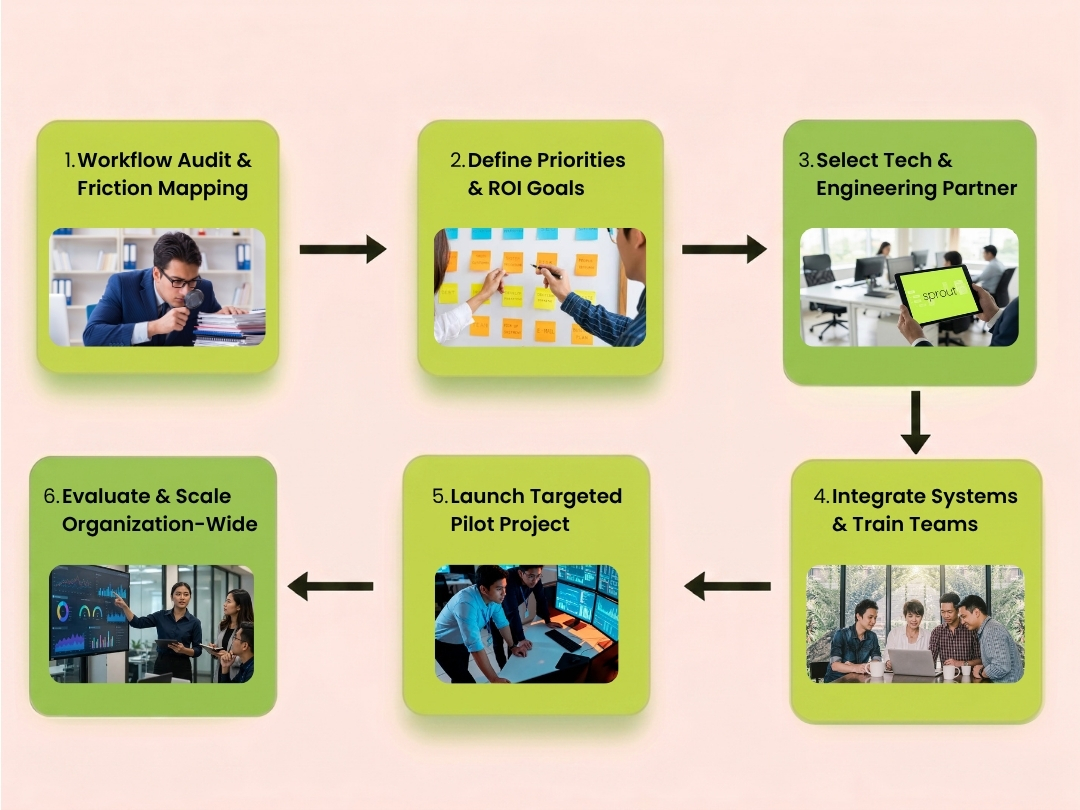
Workflow Audit and Friction Mapping: Evaluate existing operational workflows to identify manual bottlenecks and time-consuming tasks.
Define Priorities and ROI Metrics: Establish measurable goals, such as targets for turnaround time reduction or operational cost savings.
Select the Right Technology and Engineering Partner: Determine whether off-the-shelf software or custom application engineering fits your unique operational needs.
Launch a Targeted Pilot Project: Begin with a single department or workflow to test system performance and gather feedback before wider rollout.
Enable Teams and Manage Culture Shift: Provide comprehensive training so employees understand how the new tools simplify their daily tasks.
Evaluate and Scale: Monitor performance metrics continuously, refining processes before expanding automation across other business units.
Common Challenges in Company Digitization
Modernizing enterprise software infrastructure involves overcoming common operational hurdles:
Resistance to Change: Employees comfortable with established manual routines may hesitate to adopt new software tools.
Technical Talent Shortages: A lack of internal software engineering expertise needed to build and maintain modern systems.
Legacy System Integration: Difficulties connecting new applications with legacy databases and existing core software.
Data Security and Privacy Concerns: Mitigating cyber risks when transitioning critical corporate data to digital environments.
Addressing these challenges requires executive leadership commitment alongside experienced product engineering partners versed in enterprise software design and data security.
Accelerate Your Enterprise Digitization with Sprout
Digitization requires more than purchasing new software licenses, as it involves engineering a resilient, secure digital foundation built to scale alongside your organization.
At Sprout, we partner with business leaders and IT executives to design, engineer, and deploy custom software products, AI-driven process automation, and enterprise application architectures tailored to your industry goals.
Ready to boost operational efficiency and accelerate your business growth? Contact the Sprout team today to schedule an enterprise digitization consultation.
FAQ (Frequently Asked Questions)
How long does company digitization take?
Timelines depend on organizational scope. Automating a single workflow can take 1 to 2 months, whereas an enterprise-wide software modernization roadmap typically spans 6 to 18 months.
Does digitizing a company always require a massive budget?
Not necessarily. Digitization can be executed in phased stages, starting with high-ROI workflows. Strategic technology investments reduce operational costs over time, delivering positive net returns.
How can leadership overcome employee resistance to digitization?
Involve employees early in the planning stage, communicate how digital tools eliminate tedious manual work, and provide thorough training programs to ensure smooth adoption.