
The growing demand for high-performing digital applications prompts many modern enterprises to seek external software engineering partners. Whether launching a new platform, automating business operations, or modernizing legacy architectures, choosing the right software development partner dictates the return on your digital investment.
However, navigating the crowded marketplace of technology vendors presents a challenge. This article provides an essential 2026 guide and checklist for evaluating a software house in Indonesia capable of delivering enterprise-grade digital products.
What Is a Software House?
A software house is a professional software engineering firm that designs, builds, tests, and maintains custom digital applications tailored specifically to a client's operational goals.
Unlike traditional vendors selling off-the-shelf software licenses, a software house in Indonesia covers the entire digital product lifecycle. Services include product strategy, UI/UX design, frontend and backend engineering, security testing (QA/Pentest), and cloud infrastructure maintenance.
A software house in Indonesia is a professional software engineering company that helps organizations design, engineer, and operate custom web, mobile, and AI solutions built to enterprise standards.
In-House Team vs Freelancer vs Software House
Before engaging an external partner, leadership must evaluate which software development model best aligns with organizational objectives.
Here is a side-by-side comparison of software delivery models:
Parameter | In-House Engineering Team | Freelance Developers | Professional Software House |
Time to Kickoff | Slow (Requires lengthy hiring processes) | Very Fast | Fast (Pre-assembled expert teams ready to deploy) |
Team Scalability | Rigid with high fixed operational overhead | Highly limited to individual capacity | Flexible based on product engineering phases |
Skillset Breadth | Limited to internal headcount specialties | Usually focused on single technical disciplines | Complete cross-functional teams (Architects, UI/UX, QA, DevOps, AI) |
Legal Protections & SLA | Subject to standard employment contracts | High risk of commitment and reliability issues | Protected by enterprise legal agreements and clear SLAs |
Investment Model | High recurring monthly payroll expenses | Low initial cost with high long-term quality risks | Predictable costs based on project scope or dedicated team allocation |
The 2026 Selection Checklist for a Software House in Indonesia
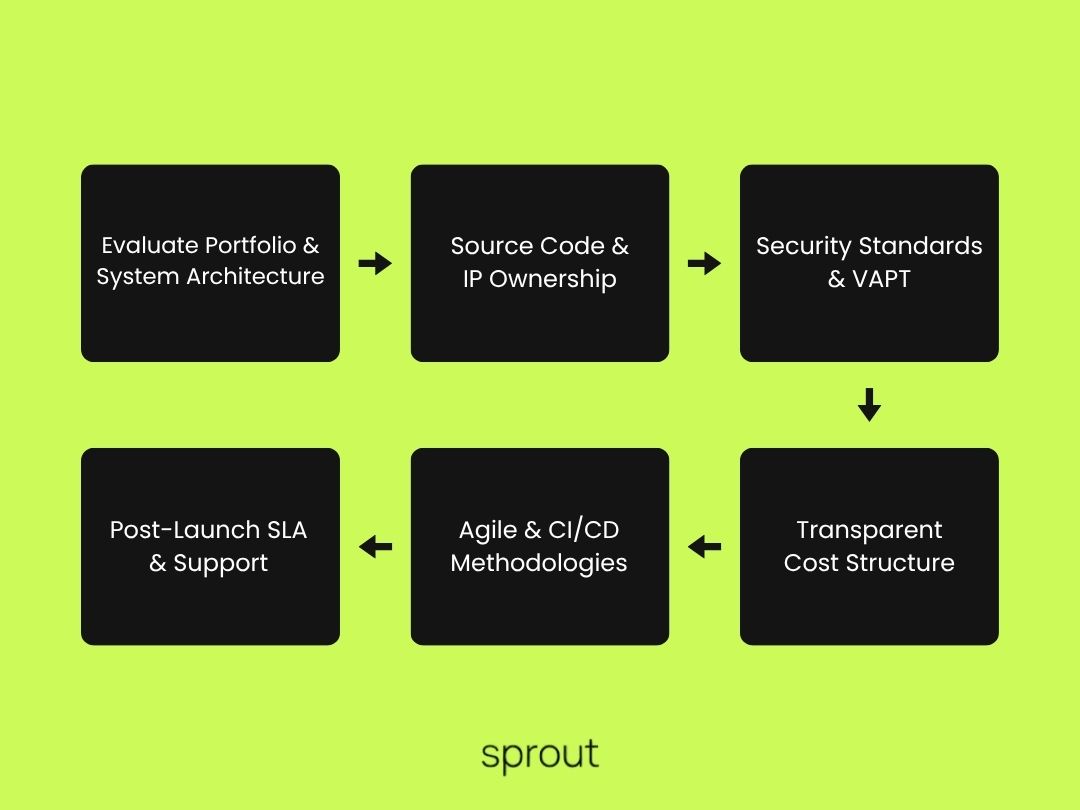
Selecting a technology partner should extend beyond comparing initial cost estimates. Use this core checklist when evaluating candidates for your enterprise software initiative:
1. Proven Portfolio and Track Record
Examine past project case studies. Do they have experience handling large-scale applications with high user concurrency? An experienced partner can demonstrate scalable system architectures and measurable business outcomes achieved for previous clients.
2. Complete Source Code and Intellectual Property Ownership
Ensure your written legal agreement explicitly states that full intellectual property rights and repository access to the source code belong unconditionally to your organization upon project completion.
3. Modern Product Engineering Methodologies
A top software house in Indonesia utilizes transparent Agile/Scrum delivery frameworks. They conduct regular sprint demos, leverage automated CI/CD deployment pipelines, and track engineering progress via transparent project management tools.
4. Data Security Standards and Regulatory Compliance
Enterprise software must adhere to strict cybersecurity standards, end-to-end data encryption, and local data privacy laws. Confirm that candidate vendors conduct rigorous vulnerability assessment and penetration testing (VAPT) prior to public releases.
5. Location and Communication Channels
For organizations based in capital hubs, partnering with a software house Jakarta or nearby metropolitan regions facilitates periodic face-to-face strategic alignment, though remote workflows remain effective when supported by structured communication protocols.
6. Transparent Costing and Post-Launch SLA
Avoid ambiguous pricing models. Ensure proposal breakdowns cover all development requirements, and verify the availability of post-launch bug warranty periods and formal Service Level Agreements (SLAs).
Partner with Sprout for Enterprise Product Engineering
As a digital product engineering and AI studio, Sprout collaborates with enterprise leaders and fast-growing companies to build custom software systems that are secure, scalable, and engineered for market leadership.
Sprout combines expertise across modern software development (web, native Android, and iOS), cloud architecture, and cutting-edge artificial intelligence integrations (Conversational AI, RAG, and Agentic AI). We prioritize complete engineering transparency and guarantee 100% source code ownership for your team.
Ready to bring your software product vision to life? Contact the Sprout team today to schedule a technical project consultation.
FAQ (Frequently Asked Questions)
What is the difference between a software house and an IT consultant?
IT consultants focus primarily on strategic guidance, software audits, and technical advisory. A software house goes beyond advisory services by directly designing, engineering, testing, and deploying the actual digital software product.
What is the average cost of engaging a software house in Indonesia?
Project costs vary based on application complexity, target platforms, and third-party system integrations. Mid-to-large enterprise application development projects typically range from tens to hundreds of millions of IDR depending on engineering scope and duration.
Can a software house take over an existing, partially completed software project?
Yes. However, a professional software house will first perform a comprehensive code and architecture audit to evaluate code quality, security, and technical debt before continuing feature development.